
17+ Entryway Decor Ideas for Homes Without a Foyer
Not every home comes with a defined foyer, yet every home needs a functional and welcoming entryway. In open-plan apartments, small houses, or layouts where the front door opens directly into the living space, creating an entry zone can feel challenging. Without walls or a designated area, the entryway must be carved out visually rather than structurally. With the right decor choices—such as strategic furniture placement, lighting, storage, and wall treatments—you can create a clear, stylish entry experience that feels intentional and organized, even without a traditional foyer.
Entryway Decor Ideas for Homes Without a Foyer
1. Define the Entry with a Rug
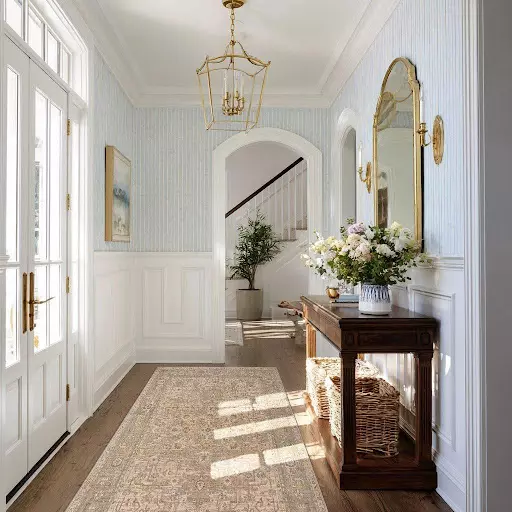
A well-placed rug immediately signals the entry zone. Choose a durable, easy-to-clean rug that contrasts with the surrounding flooring. This visual boundary helps separate the entry from the living area while adding warmth and texture.
You can also check more ideas
- 15 Modern Powder Room Makeover Ideas You’ll Love
- 20 Awkward Corner Decor Ideas in Living Room
- 16 Modern Kitchen and Living Room Flooring Ideas
- 26 Black, White, and Gold Living Room Decor Ideas
- 26 Stylish Nursery-Office Combo Designs You’ll Love
2. Slim Console Table Placement
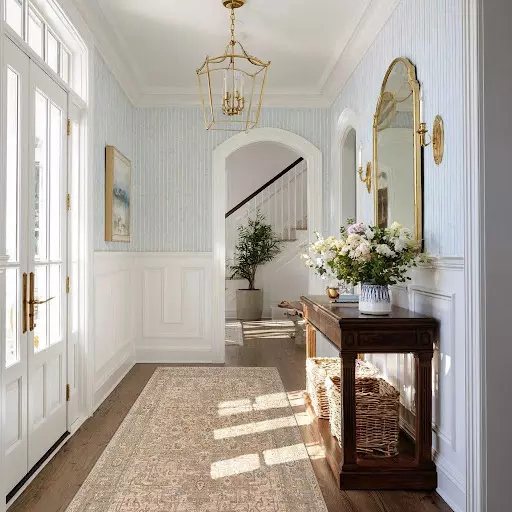
A narrow console table behind a sofa or along the wall near the door provides a functional drop zone for keys, mail, and decor. Its slim profile keeps walkways clear while visually anchoring the entry space.
3. Wall-Mounted Hooks for Everyday Use
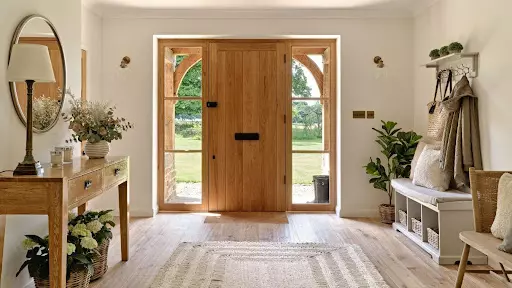
Hooks installed near the door offer an instant solution for coats, bags, and hats. Opt for decorative or uniform hooks to keep the area stylish while preventing clutter from spreading into the living space.
4. Entryway Mirror for Depth and Function
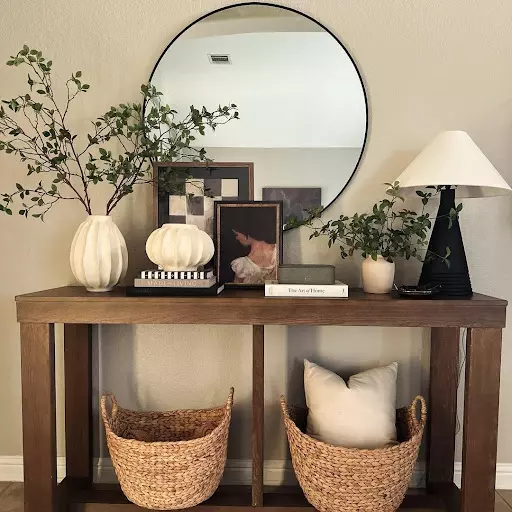
A mirror near the door serves both practical and decorative purposes. It allows for last-minute checks before leaving and reflects light, making the entry area feel larger and brighter.
5. Use Furniture as a Visual Divider
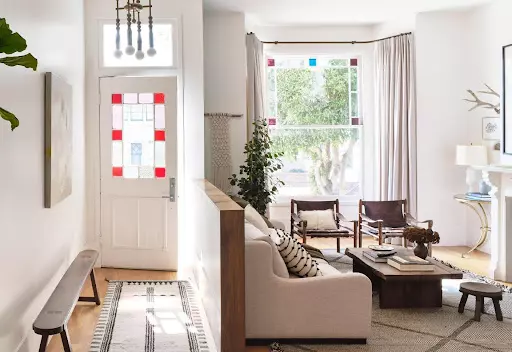
Position a sofa, bookcase, or bench to subtly separate the entry from the rest of the room. This creates a natural boundary without blocking light or making the space feel closed off.
6. Floating Shelf Drop Zone
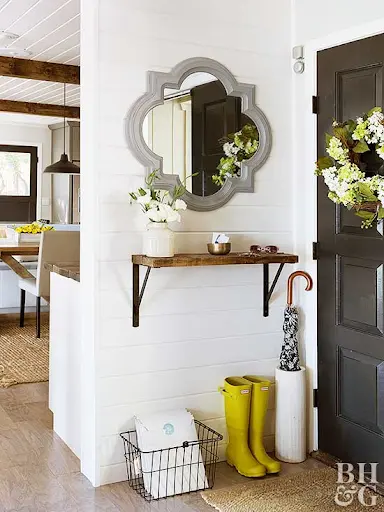
A floating shelf acts as a compact console alternative. It provides space for essentials without taking up floor space, making it ideal for small or open-plan homes.
7. Entryway Bench for Seating and Storage
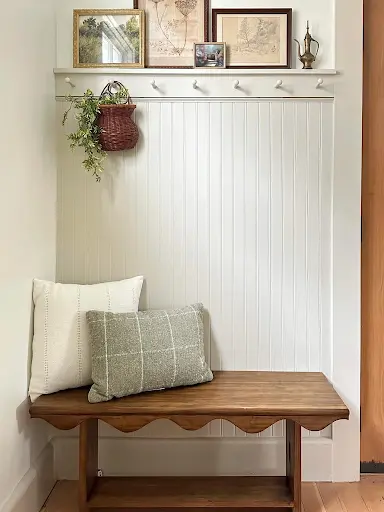
A small bench gives you a place to sit while putting on shoes and can include hidden storage underneath. This adds function while reinforcing the sense of an entry area.
8. Statement Wall Art or Accent Wall
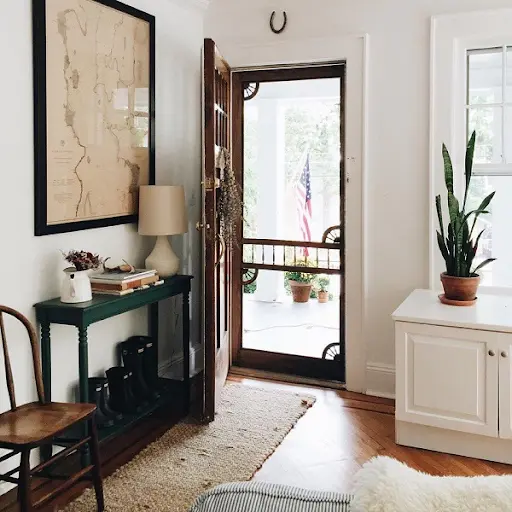
Create a focal point near the door with artwork, wallpaper, or a bold paint color. This visually anchors the entry and prevents it from blending into the living area.
9. Lighting to Mark the Entry Zone
A pendant light, wall sconce, or table lamp near the door helps define the entryway. Layered lighting makes the space feel intentional and welcoming.
10. Tall Plant or Greenery Feature
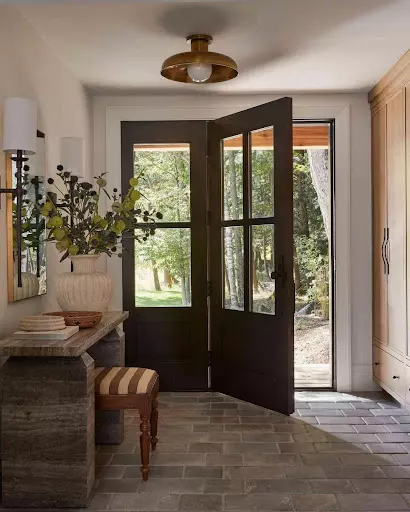
A tall indoor plant placed near the door softens the transition into the home. Plants add height, color, and life, helping the entry feel styled rather than improvised.
11. Shoe Storage Solutions
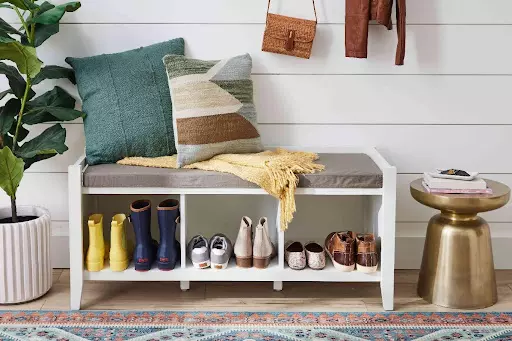
Use a slim shoe cabinet, baskets, or trays to keep footwear organized. Containing shoes near the door maintains cleanliness and order throughout the home.
12. Gallery Wall for Visual Identity
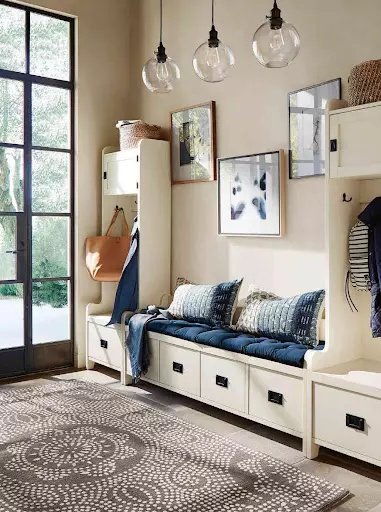
A gallery wall near the entrance creates personality and a sense of arrival. Choose cohesive frames or themes to keep the look polished and intentional.
13. Use Vertical Space Efficiently
Maximize wall height with tall shelves, coat racks, or storage towers. Vertical solutions help create an entry zone without expanding the footprint.
14. Decorative Screen or Room Divider
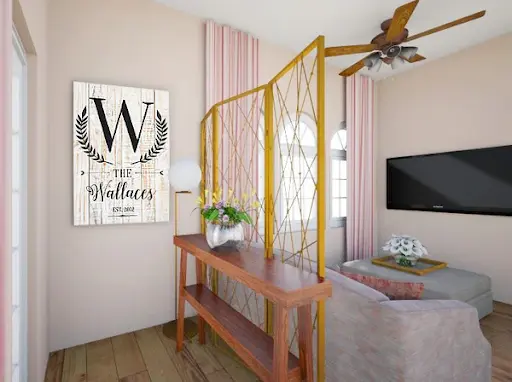
A folding screen or open divider visually separates the entry from the living space. This adds structure without requiring permanent walls or renovation.
15. Layered Textures for Warmth
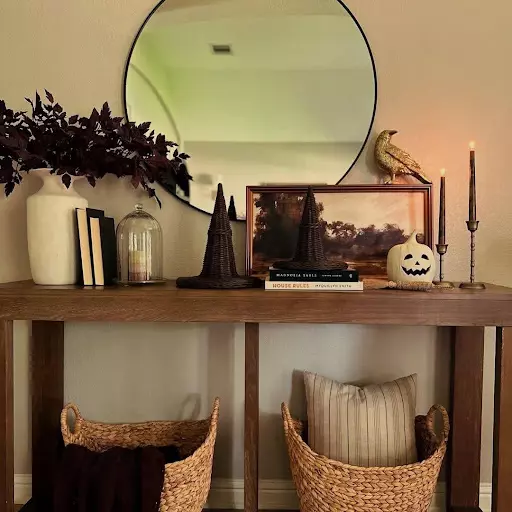
Incorporate materials like wood, metal, woven baskets, and soft textiles. Layering textures helps the entry feel cozy and inviting rather than transitional.
16. Catch-All Trays and Bowls
Stylish trays or bowls on a console or shelf prevent small items from cluttering the space. These accessories keep essentials contained and easy to find.
17. Ceiling-to-Floor Curtains as Soft Boundaries
Curtains can act as a soft divider, visually separating the entryway while maintaining flexibility and flow. This works especially well in apartments or rentals.
18. Consistent Color Palette Transition
Use a cohesive color scheme between the entry area and adjacent rooms. Consistency helps the entry feel like an intentional part of the overall design rather than an afterthought.