
15+ Ceiling Decor Ideas for Low Height Rooms
Low ceilings can make rooms feel cramped, heavy, or visually unbalanced if not treated thoughtfully. However, ceiling height does not have to limit style. With the right decor strategies, low-height rooms can feel open, elegant, and intentionally designed. The key is to enhance vertical perception, avoid visual clutter, and use light, color, and proportion to your advantage. Ceiling decor in low rooms should emphasize subtlety and cohesion rather than bold, bulky features. These ideas focus on maximizing style while maintaining a sense of openness and comfort.
Ceiling Decor Ideas for Low Height Rooms
1. Light-Colored Ceiling Paint
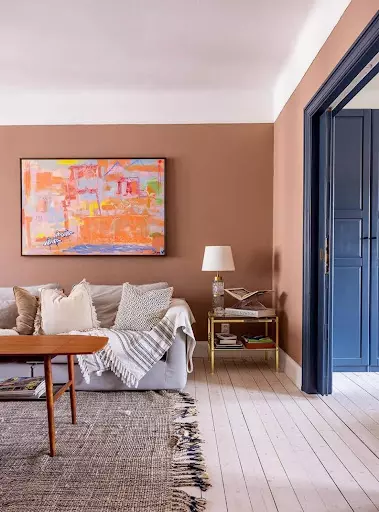
Painting the ceiling in white or soft neutral tones reflects light and visually lifts the room. Lighter ceilings recede from view, creating the illusion of greater height without structural changes.
2. Gloss or Satin Ceiling Finish
A slight sheen on the ceiling subtly reflects light and adds depth. Gloss or satin finishes bounce light around the room, making low ceilings feel less heavy and more expansive.
3. Flush-Mount Lighting Fixtures
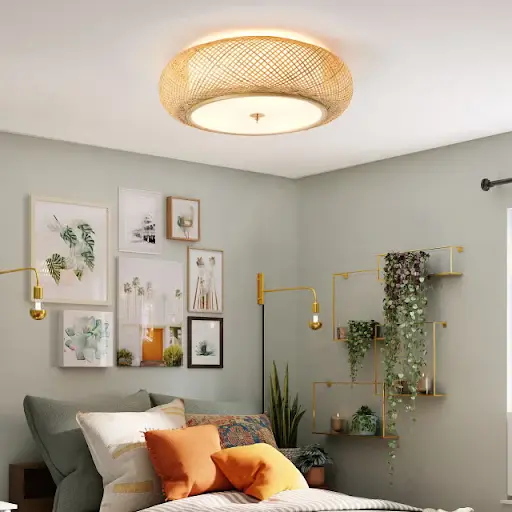
Flush or semi-flush ceiling lights sit close to the ceiling and prevent visual clutter. These fixtures provide adequate illumination without lowering the perceived ceiling height.
4. Recessed Lighting Layout
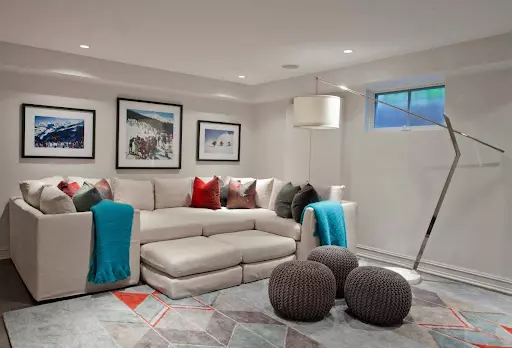
Recessed lights blend seamlessly into the ceiling, eliminating bulky fixtures. Evenly spaced recessed lighting enhances brightness while maintaining a clean, unobtrusive look.
5. Ceiling-Integrated LED Strip Lighting
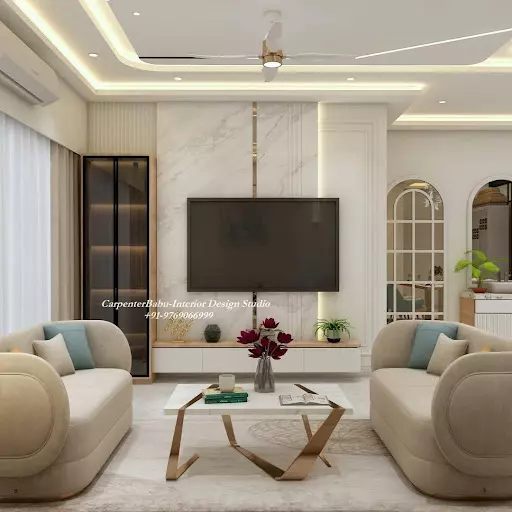
LED strip lighting installed along ceiling edges or coves creates a soft glow that visually lifts the ceiling. Indirect lighting draws the eye upward without adding bulk.
6. Ceiling and Wall Color Continuity
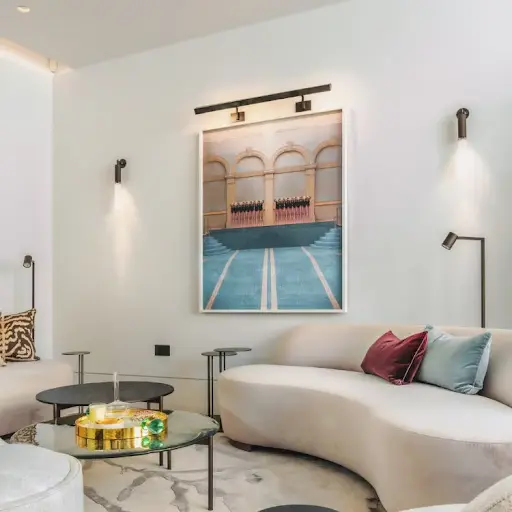
Painting the ceiling the same color as the walls blurs boundaries, making the room feel taller. This technique works particularly well with light or mid-tone colors.
7. Vertical Visual Emphasis
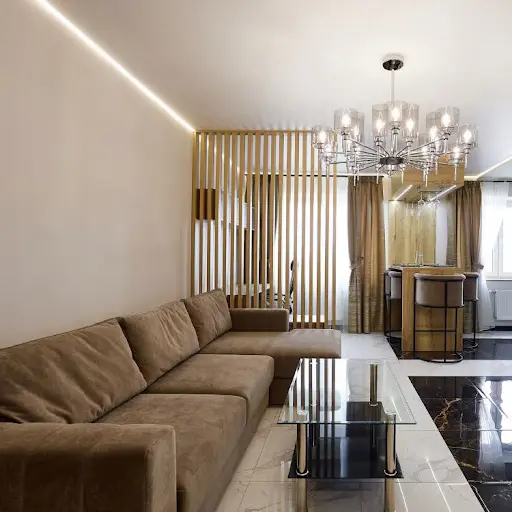
Pair subtle ceiling decor with vertical elements such as tall wall panels or elongated lighting. Vertical cues draw attention upward, counteracting low ceiling height.
8. Minimalist Ceiling Moldings
Thin crown moldings or trim add refinement without crowding the ceiling. Avoid heavy or ornate designs, which can visually lower the room.
9. Soft Ceiling Textures
Subtle textures like smooth plaster or lightly patterned finishes add interest without overwhelming the space. Texture adds depth while maintaining a clean aesthetic.
10. Ceiling Fans with Low Profiles
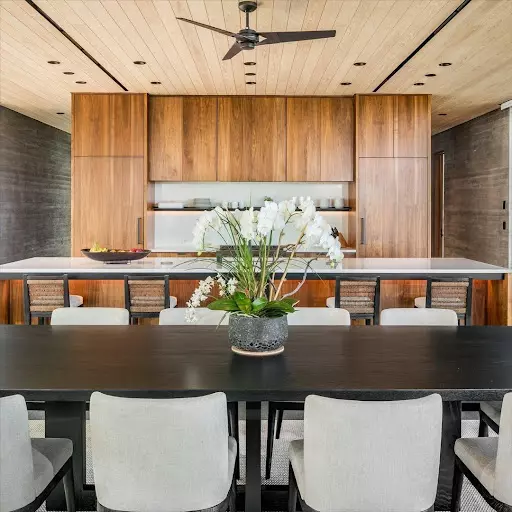
Choose sleek, low-profile ceiling fans designed specifically for low ceilings. These provide air circulation while preserving headroom and visual openness.
11. Reflective Ceiling Elements
Mirrored or metallic ceiling accents reflect light and create the illusion of height. When used sparingly, they add elegance without overpowering the room.
12. Ceiling Wallpaper with Vertical Patterns
Wallpaper with subtle vertical patterns can visually stretch the ceiling upward. Stick to light colors and delicate designs to maintain balance.
13. Soft Cove or Perimeter Lighting
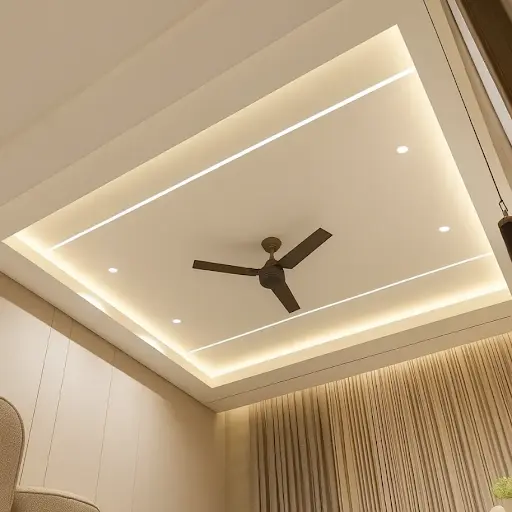
Cove lighting installed along ceiling edges enhances height perception by illuminating the upper walls. This indirect glow adds depth and sophistication.
14. Continuous Ceiling Lines
Linear ceiling elements or subtle beams running lengthwise guide the eye across the room. Horizontal continuity reduces the feeling of compression.
15. Monochromatic Ceiling Design
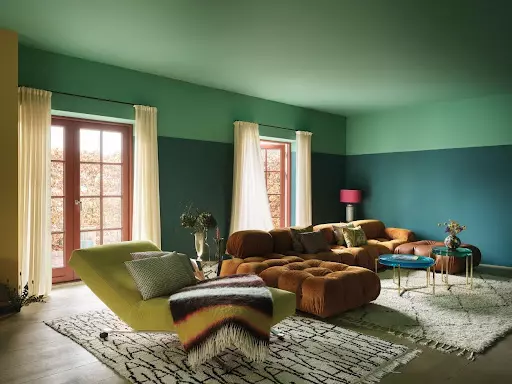
Using a single color palette for ceiling, walls, and trim creates visual cohesion. This uninterrupted flow makes the room feel more open and airy.
16. Ceiling Medallions with Minimal Design
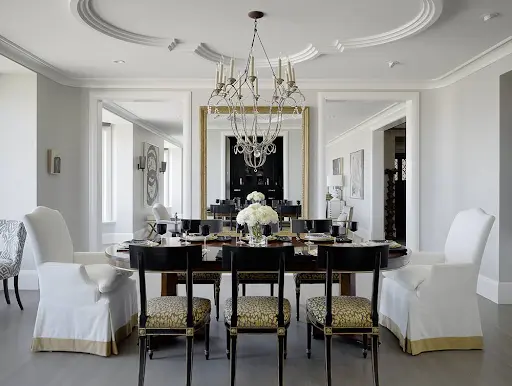
If using a medallion, choose a slim, understated style. Minimal medallions add character without dominating the ceiling plane.
17. Lightweight Hanging Decor (Used Sparingly)
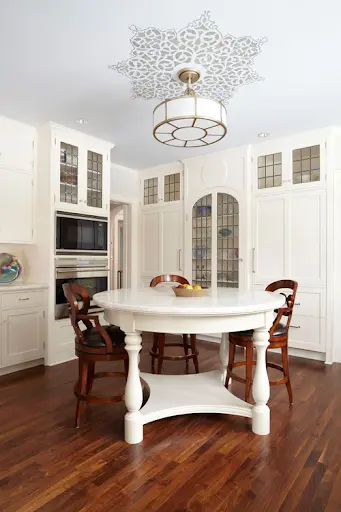
Very minimal hanging elements, such as small pendants or paper lanterns, can work if they stay close to the ceiling. Balance is key to avoid visual heaviness.
18. Strategic Lighting Placement
Placing lighting closer to walls rather than the center reduces downward emphasis. This technique keeps the ceiling from feeling oppressive.